Flies in Restaurants: Why They Appear and How to Protect Food Safety
Finding flies in a restaurant or commercial kitchen may seem like a minor inconvenience, but the reality is very different. Flies are one of the most common pests in food businesses and pose a significant food safety risk, as they can transfer microorganisms to food, work surfaces and equipment.
During the warmer months, particularly in the Algarve, fly activity increases significantly. Understanding why flies appear, the risks they pose and how to prevent infestations is essential for any food business.
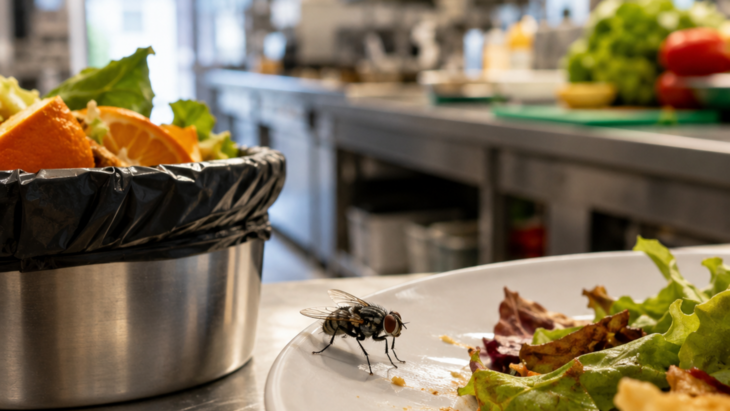
Why Do Flies Appear in Restaurants?
Flies are attracted to places where they can easily find food, water and suitable breeding conditions.
Restaurants, cafés, bakeries, hotels and other food establishments can unintentionally provide these conditions if appropriate preventive measures are not in place.
The most common factors that attract flies include:
- Food waste;
- Uncovered rubbish bins;
- Food debris in difficult-to-clean areas;
- Drains containing organic matter;
- Doors left open for extended periods;
- Outdoor waste storage areas or vegetation.
Even businesses with excellent hygiene standards may experience seasonal fly problems due to the increase in insect populations during the summer.
Why Are Flies a Food Safety Risk?
Contrary to popular belief, the biggest problem is not the fly itself, but what it may carry.
Flies frequently land on:
- Waste containers;
- Drains and sewage areas;
- Animal faeces;
- Decaying organic matter.
They then move onto food, utensils, equipment and food preparation surfaces, potentially transferring bacteria and other harmful microorganisms.
For this reason, flies are considered one of the most important pests from a food safety perspective.
Why Are There More Flies During the Summer?
The Algarve's warm climate provides ideal conditions for the fly life cycle.
Higher temperatures accelerate larval development and significantly increase reproduction rates.
A small fly population can multiply rapidly if favourable conditions exist.
This is why preventive action before the summer season is one of the most effective ways to avoid infestations.
Where Do Flies Breed?
Flies lay their eggs in areas rich in organic matter.
The most common breeding sites include:
- Waste containers;
- Outdoor rubbish bins;
- Drains and drainage systems;
- Accumulated food waste;
- Composting areas;
- Decaying organic material.
Eliminating these breeding sites is essential for reducing fly populations.
The Most Common Mistakes That Attract Flies
Many fly infestations are caused by small operational mistakes.
The most frequent include:
- Leaving doors open during service;
- Allowing waste to accumulate for too long;
- Failing to clean waste containers properly;
- Poor drain maintenance;
- Incorrect food storage practices.
Simple improvements to daily procedures can significantly reduce the risk of infestation.
How Can You Prevent Flies in Restaurants?
Prevention remains the most effective way to control this pest.
Recommended measures include:
- Proper waste management;
- Frequent cleaning of rubbish bins;
- Keeping doors closed whenever possible;
- Installing air curtains or automatic doors;
- Fly screens on windows;
- Regular drain maintenance;
- Daily cleaning of food preparation areas.
Combining these measures significantly reduces the likelihood of flies entering and breeding within the premises.
Do UV Fly Traps Work?
Yes, when installed correctly.
Ultraviolet fly control units are widely used in restaurants and food businesses to monitor and reduce flying insect activity.
However, they should be positioned carefully:
- Away from food preparation areas;
- Out of direct sunlight;
- Along natural insect flight paths;
- As part of a structured monitoring programme.
UV fly traps are an important preventive tool, but they cannot replace the need to eliminate the conditions that allow flies to thrive.
Flies and HACCP
Within HACCP Algarve, flying insect control forms part of the prerequisite programmes relating to pest control.
During inspections or audits, businesses may be assessed on:
- Monitoring programmes;
- Maintenance records;
- Placement of UV fly control units;
- Evidence of flying insect activity;
- Corrective actions implemented.
An effective prevention programme demonstrates a company's commitment to food safety.
When Should You Contact a Professional Pest Control Company?
If fly activity becomes persistent, increases rapidly or continues despite cleaning efforts, it is advisable to seek a professional inspection.
A professional pest control company can:
- Identify the source of the infestation;
- Locate breeding sites;
- Recommend corrective actions;
- Implement an ongoing monitoring programme;
- Integrate fly management into an Integrated Pest Management (IPM) programme.
Flies in the Algarve: A Seasonal Challenge
The Algarve's warm climate and increased tourism during spring and summer create ideal conditions for larger fly populations.
Restaurants, hotels, cafés, bars and other food businesses in Faro, Loulé, Almancil, Quarteira, Vilamoura, Albufeira, Olhão, Tavira, Lagos and Portimão should strengthen preventive measures before the busy season begins.
A proactive prevention strategy is generally far more effective and cost-efficient than dealing with an established infestation.
Flies are far more than a nuisance for customers and staff. They are an important pest that can compromise food safety, HACCP compliance and your business reputation.
Prevention, proper waste management, continuous monitoring and professional pest control measures are essential for maintaining a safe and hygienic food environment.
Are you experiencing problems with flies in your restaurant or food business?
Prevenção Ativa helps businesses throughout the Algarve implement effective fly control, pest management and Integrated Pest Management (IPM) solutions to protect food safety and maintain HACCP compliance.