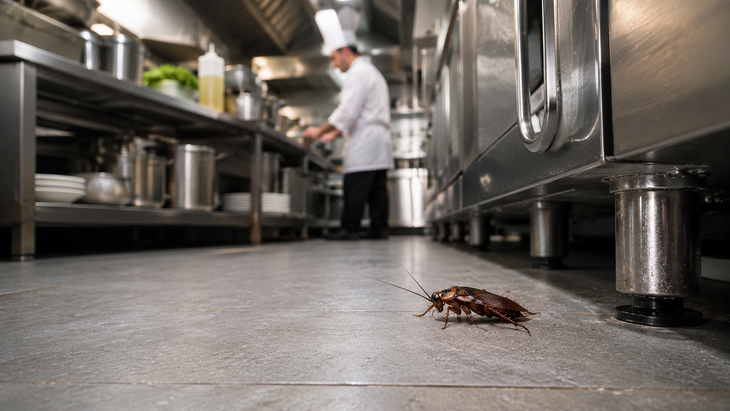
Ants in Restaurants: Why They Appear and How to Prevent Infestations
Finding ants in a restaurant or commercial kitchen may seem like a minor issue, but their presence can indicate weaknesses in hygiene management, food storage or building maintenance. Although ants do not present the same level of food safety risk as some other pests, they can contaminate food, damage a business's reputation and indicate conditions that allow pests to thrive.
In the Algarve, especially during the warmer months, ant activity increases significantly. Understanding why ants appear, how they enter buildings and the best ways to prevent infestations is essential for protecting food safety and maintaining HACCP compliance.
Why Do Ants Appear in Restaurants?
Ants enter buildings primarily in search of food and water. Once a worker ant discovers a food source, it leaves a pheromone trail that guides the rest of the colony to the same location.
For this reason, a single ant can quickly become a trail of dozens or even hundreds.
The most common attractants include:
- Sugar and sweet foods;
- Food crumbs and leftovers;
- Spilled drinks;
- Oils and grease;
- Standing water;
- Poorly stored food.
How Do Ants Enter Restaurants?
Ants can enter buildings through extremely small openings.
Common entry points include:
- Gaps around doors and windows;
- Cracks in walls;
- Pipe penetrations;
- Service ducts;
- Floor joints;
- Cable entry points.
Once they locate a food source, they repeatedly use the same route to return to the nest.
Why Are Ants a Food Safety Concern?
While searching for food, ants travel across a wide range of environments before reaching food preparation areas.
Although they generally pose a lower food safety risk than rodents or cockroaches, ants can still carry microorganisms and contaminants from outside or from less hygienic areas of the premises.
In addition, the sight of ants in a kitchen or dining area can negatively affect customer confidence.
Where Are Ants Most Commonly Found?
Ants are usually attracted to locations where food is easily accessible.
They are commonly found:
- Near coffee machines;
- In bakery and pastry preparation areas;
- Around beverage dispensers;
- In storage rooms and pantries;
- In washing-up areas;
- Near waste storage bins.
The Most Common Mistakes That Attract Ants
Many infestations result from small operational mistakes.
- Leaving food residues overnight;
- Open food packaging;
- Uncovered waste bins;
- Poor equipment cleaning;
- Standing water on worktops or floors;
- Insufficient maintenance of doors and windows.
Correcting these issues significantly reduces the likelihood of an infestation.
How Can You Prevent Ants in Restaurants?
Prevention remains the most effective strategy.
The most important measures include:
- Maintaining excellent cleaning standards;
- Storing food in sealed containers;
- Removing waste daily;
- Sealing cracks and entry points;
- Eliminating unnecessary water sources;
- Regular monitoring of the premises.
Do Ant Baits Work?
Yes, when correctly selected and applied.
Unlike contact insecticides, ant baits are carried back to the nest by worker ants, allowing the colony itself to be targeted more effectively.
Baits should always be placed strategically as part of an Integrated Pest Management (IPM) programme.
Ants and HACCP
Within HACCP Algarve, pest prevention also includes controlling ants in food premises.
During inspections or audits, businesses may be assessed on:
- Pest monitoring records;
- The pest control programme;
- Evidence of pest activity;
- Corrective actions implemented;
- Hygiene and food storage standards.
A strong prevention programme demonstrates a company's commitment to food safety.
When Should You Contact a Professional Pest Control Company?
If ants continue to appear despite good hygiene and preventive measures, it is advisable to seek professional assistance.
A professional pest control company can:
- Identify the ant species;
- Locate the nest;
- Determine entry points;
- Apply appropriate bait systems;
- Implement an ongoing monitoring programme.
Ants in the Algarve: A Common Summer Problem
The Algarve's warm climate encourages increased ant activity from spring through to early autumn.
Restaurants, cafés, hotels and other food businesses in Faro, Loulé, Almancil, Quarteira, Vilamoura, Albufeira, Olhão, Tavira, Lagos, Portimão and surrounding areas should strengthen preventive measures before the busiest season begins.
A proactive prevention strategy is considerably more effective and cost-efficient than dealing with an established infestation.
Although ants are often viewed as little more than a nuisance, they can indicate underlying hygiene, food storage or maintenance issues that should never be ignored.
Combining good housekeeping, correct food storage, continuous monitoring and a professional pest control programme helps protect food safety, maintain HACCP compliance and safeguard your business's reputation.
Are you experiencing problems with ants in your restaurant or food business?
Prevenção Ativa provides professional ant control, pest management and Integrated Pest Management (IPM) solutions for businesses throughout the Algarve, helping protect food safety and ensure long-term pest prevention.
Request your free quote now: