The Importance of Temperature Control in Refrigerators and Cold Equipment in Restaurants
Temperature control in refrigerators, cold rooms, and freezing equipment is one of the fundamental pillars of food safety in the restaurant sector. Even small temperature variations can compromise food quality, encourage the growth of microorganisms, and lead to serious non-compliances during inspections.
Within the framework of HACCP regulations in Portugal, proper temperature control is not optional: it is a legal requirement and a critical control point in almost every food business.
Why Is Temperature So Important?
Perishable foods must be stored at temperatures that prevent or slow down the multiplication of pathogenic bacteria such as Salmonella or Listeria. When refrigeration equipment does not operate correctly, the risk of food contamination increases significantly.
It is important to remember that cold temperatures do not kill bacteria, but they help control their growth. For this reason, maintaining correct temperatures is essential to ensure food safety.
Recommended Temperatures for Cold Storage Equipment
According to food safety best practices and HACCP principles, the most commonly accepted reference values are:
- Refrigerators: between 0°C and 5°C
- Cold rooms: up to 5°C
- Freezers: -18°C or -23 °C
These values should be adapted to the type of food stored and clearly defined in the establishment’s HACCP plan.
The Role of HACCP in Temperature Control
Within the HACCP system, cold storage equipment is usually considered a Critical Control Point (CCP) or an operational control point. This means that:
- Temperatures must be monitored regularly
- Control records must be kept
- Corrective actions must be defined and applied in case of deviations
Missing records or inconsistent monitoring are among the most frequent non-conformities identified during audits and inspections.
How to Keep Equipment Within HACCP Limits
1. Regular Monitoring
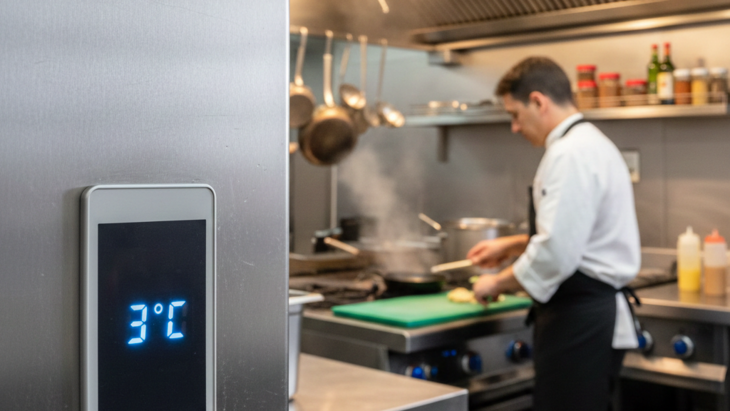
Check and record temperatures daily, ideally at the beginning and end of service. Use calibrated thermometers that are easy to read.
2. Preventive Maintenance
Regular maintenance is essential to prevent unexpected breakdowns. Cleaning condensers, checking door seals, and scheduling technical inspections help ensure reliable equipment performance.
3. Avoid Overloading Refrigerators
Overloaded equipment restricts cold air circulation, creating areas with unsafe temperatures. Proper internal organisation directly supports food safety.
4. Food Organisation and Stock Rotation
Store food correctly, separated by category, with clear labelling and visible dates. Apply the FIFO principle (first in, first out).
5. Corrective Actions
If a temperature deviation is detected, immediate action is required: assess food safety, correct the technical issue, and record the incident according to HACCP procedures.
Consequences of Poor Temperature Control
Failure to comply with temperature requirements may result in:
- Increased risk to consumer health
- Financial losses due to food waste
- Non-conformities during audits
- Fines or suspension of activity during inspections
Food Safety Starts with Temperature Control
Keeping cold storage equipment within correct limits is a daily responsibility and one of the most important aspects of food safety in restaurants.
At Prevenção Ativa, we support food businesses in implementing effective HACCP systems, defining clear temperature control procedures, and training teams to ensure full compliance with Portuguese regulations.
Want to ensure your refrigeration equipment meets HACCP requirements?
Contact us and request a free quotation.