Food Moths: The Silent Pest in Storage Rooms and Pantries
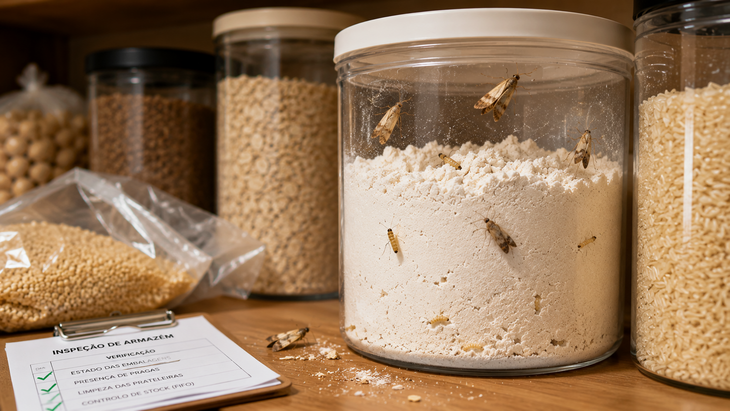
Finding small moths near shelving, larvae inside flour packaging or silky webbing in dry food products are some of the first signs of food moths. These are among the most common pests found in food warehouses, restaurants, cafés, bakeries, supermarkets and hotels, and they can cause food contamination, stock losses and non-conformities during HACCP audits.
Unlike some other pests, food moths usually develop inside stored products. This means an infestation may remain hidden for several weeks before it is detected. Prevention and continuous monitoring are therefore essential for protecting food safety.
To better understand the importance of a preventive programme, we also recommend reading our article on Integrated Pest Management (IPM), where we explain how different control measures work together to prevent infestations.
What Are Food Moths?
Food moths are small insects that attack stored dry food products. The most common species lay their eggs directly on or close to food, allowing the larvae to feed on the product as they develop.
Although adult moths are easily recognised as small, slow-flying insects near shelving or storage areas, it is the larvae that cause almost all the damage.
As they feed, they leave behind waste, silk, cocoons and droppings that make the food unsuitable for consumption.
Which Foods Are Most Commonly Affected?
Food moths prefer dry products that have been stored for extended periods.
The products most commonly affected include:
- Flour;
- Rice;
- Pasta;
- Cereals;
- Nuts;
- Seeds;
- Dried fruit;
- Spices;
- Cocoa powder;
- Pet food.
A single infested package may be enough to contaminate an entire pantry or food storage area.
How Do Food Moths Enter a Restaurant?
Contrary to what many people assume, food moths do not usually enter by flying through doors or windows.
The most common route of entry is through products that are already contaminated when they arrive from suppliers.
A package that appears completely normal may already contain microscopic eggs or larvae that only become visible days or weeks later.
Food moths may also enter through open doors, loading areas or goods-receiving zones, although this is less common.
How Can Businesses Avoid Receiving Food Moths from Suppliers?
One of the most effective preventive measures is to inspect all deliveries carefully when they are received.
Before accepting a delivery, check for:
- Torn or damaged packaging;
- Small holes in packages;
- Silky webbing;
- Larvae or small insects;
- Residue inside boxes;
- Signs of moisture.
Where possible, newly delivered products should remain separate from existing stock until they have been inspected.
Correct application of the FIFO system — First In, First Out — also reduces storage time and significantly lowers the risk of pest development.
What Are the First Signs of an Infestation?
The earlier the infestation is identified, the lower the potential loss.
The most common signs include:
- Small moths flying near shelving;
- White larvae inside packages;
- Silky webbing in flour or cereals;
- Food products sticking together;
- Cocoons on shelving or in corners;
- Insects near storage areas.
When any of these signs are identified, all nearby stored products should be inspected carefully.
Why Are Food Moths a Food Safety Problem?
Although food moths do not usually spread disease in the same way as cockroaches or rodents, they contaminate food with eggs, larvae, silk, cocoons and biological waste.
Contaminated products no longer meet the required quality and food safety standards and should not be used.
In addition to financial losses, an infestation may cause customer complaints, food waste and non-conformities during HACCP audits.
How Can Food Moths Be Prevented?
Preventing an infestation is considerably easier than eliminating one that is already established.
The most effective measures include:
- Inspecting all goods when they are received;
- Applying the FIFO system correctly;
- Storing food in sealed containers;
- Cleaning shelving and storage rooms regularly;
- Removing infested products immediately;
- Continuously monitoring storage areas;
- Maintaining inspection records.
These measures form part of an Integrated Pest Management (IPM) strategy that combines prevention, monitoring and targeted intervention only when necessary.
Do Pheromone Traps Work?
Yes.
Pheromone traps can detect the presence of food moths at a very early stage, before a major infestation develops.
They are highly useful for monitoring changes in activity and assessing the effectiveness of the measures in place.
However, pheromone traps do not eliminate an established infestation on their own.
Food Moths and HACCP
Within HACCP, pest control in storage areas forms part of the programme of prerequisites.
During audits, the following may be assessed:
- Monitoring records;
- The pest control plan;
- Storage conditions;
- Stock rotation;
- Storage-area hygiene;
- Evidence of infestation.
Good storage management significantly reduces the likelihood of this pest developing.
When Should You Contact a Professional Pest Control Company?
If you find larvae, cocoons, small moths or contaminated products, it is advisable to request a professional inspection.
A company specialising in preventive and corrective pest control can:
- Identify the species correctly;
- Determine the source of the infestation;
- Locate the affected products;
- Implement corrective measures;
- Create an ongoing monitoring programme.
Food Moths in the Algarve
In the Algarve, restaurants, hotels, supermarkets, bakeries, pastry shops and food warehouses should maintain preventive programmes throughout the year.
Mild temperatures favour the development of these pests, particularly where large quantities of dry food are stored for extended periods.
A preventive approach is far more cost-effective than replacing large quantities of contaminated stock.
Food moths can remain hidden for weeks before they are discovered. By the time they become visible, several stored products may already be contaminated.
Inspecting deliveries, maintaining good stock management, ensuring thorough cleaning, monitoring continuously and implementing a professional Integrated Pest Management programme are essential for protecting food safety and maintaining HACCP compliance.
???? Have you found small moths or larvae in your stored food products?
Prevenção Ativa helps restaurants, hotels, supermarkets, bakeries and food businesses throughout the Algarve prevent and control food moth infestations through professional monitoring, pest control and Integrated Pest Management solutions.