Disinfection of Fruits and Vegetables: Why It Is Essential and How to Do It Correctly
The disinfection of fruits and vegetables is a fundamental procedure to ensure food safety in restaurants, cafés and food businesses. These products are often consumed raw or minimally processed, which increases the risk of contamination.
Within the scope of HACCP Algarve, proper cleaning and disinfection of fresh produce is essential to prevent biological risks and ensure compliance with food safety regulations.
Why Is It Necessary to Disinfect Fruits and Vegetables?
During production, transport and storage, fruits and vegetables may come into contact with various contaminants, including:
- Bacteria (such as Salmonella or E. coli);
- Viruses;
- Parasites;
- Pesticide residues;
- Dirt and organic matter.
Simply washing with water is not enough to eliminate all these risks, making proper disinfection essential.
Risks of Not Disinfecting Properly
Failure to disinfect fruits and vegetables correctly can lead to:
- Food contamination;
- Foodborne illnesses;
- Non-conformities during HACCP audits;
- Possible fines during inspections;
- Damage to business reputation.
What Is the Best Method for Disinfection?
The disinfection process should follow a structured method to ensure effectiveness and safety.
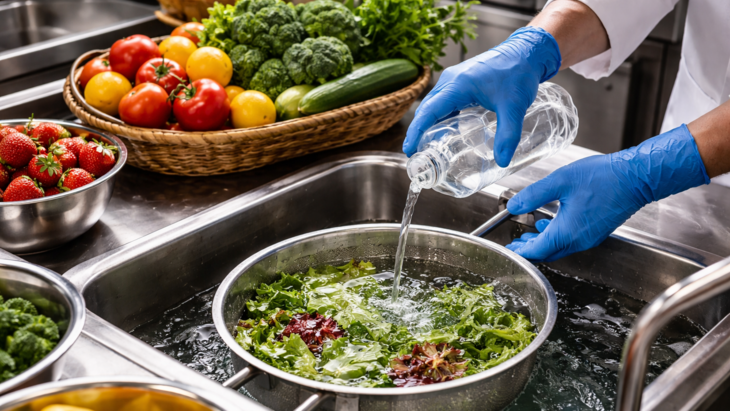
1. Initial Washing
Remove visible dirt using clean running water. This step is essential to eliminate surface residues before disinfection.
2. Preparing the Disinfectant Solution
Use a food-safe disinfectant, typically based on chlorine (sodium hypochlorite), at the concentration recommended by the manufacturer.
3. Immersion
Submerge fruits and vegetables in the disinfectant solution for the recommended contact time (usually between 5 to 15 minutes).
4. Rinsing
After disinfection, rinse thoroughly with potable water to remove any disinfectant residues.
5. Drying and Storage
Allow the products to drain or dry on clean, sanitised surfaces before storing or using them.
Best Practices within HACCP Algarve
To ensure compliance with HACCP Algarve, it is important to:
- Use approved food-grade disinfectants;
- Respect recommended concentrations;
- Maintain proper records of procedures;
- Train staff regularly;
- Avoid cross-contamination after disinfection.
Common Mistakes to Avoid
- Washing produce with water only;
- Not respecting disinfectant contact time;
- Using incorrect concentrations;
- Failing to rinse properly;
- Handling disinfected food on contaminated surfaces.
Conclusion
Disinfecting fruits and vegetables is a simple but essential step to ensure food safety and protect consumer health.
Within the framework of HACCP Algarve, this procedure should be clearly defined, properly documented and integrated into daily operations.
???? Need support implementing HACCP and food safety procedures in the Algarve?
Contact us and request a free quotation.